Andrea Caruso
Aug 4, 2025
AI Content Creation: All You Need to Know
Discover AI content creation workflows that scale efficiently while maintaining brand consistency. Learn which AI tools add value & where human oversight matters. Get structured frameworks now.

AI Content Creation: All You Need to Know
AI content creation is transforming how businesses produce marketing materials, but it demands more than adopting the latest platform. You need structured workflows, clarity on where human oversight matters, and integration that doesn't fragment your existing systems. Many teams adopt ai generated content tools without mapping any outputs, while others experiment with ai content generation tools without defining success metrics or guidelines.
The result? Content that lacks brand consistency or strategic alignment. At Lumina Studio Marketing, we design automation frameworks that connect ai for content creation to measurable business outcomes. We help operations and marketing leaders implement ai creation workflows that scale efficiently while maintaining editorial standards.
This guide covers what you need to evaluate, where ai tools for content creation add genuine operational value, and when human input remains critical.
Understanding AI Generated Content
AI generated content refers to text, images, audio, or video produced by machine learning models trained on large datasets. Quality varies depending on model architecture, training data, and how precisely you structure inputs. Most commercial tools use transformer
based models or diffusion networks. They excel at standardised formats like product descriptions, social captions, and email drafts. They struggle with nuanced tone, brand-specific terminology, and content requiring proprietary knowledge.
Consider the following operational realities:
Generated outputs require editorial review to ensure factual accuracy and
brand alignment
Models trained on public data may not reflect your internal processes or product specifics
Compliance with data protection and intellectual property laws varies by jurisdiction and use case

You should treat ai for content creation as a drafting layer, not a replacement for strategic planning or quality assurance.
Choosing AI Content Generation Tools
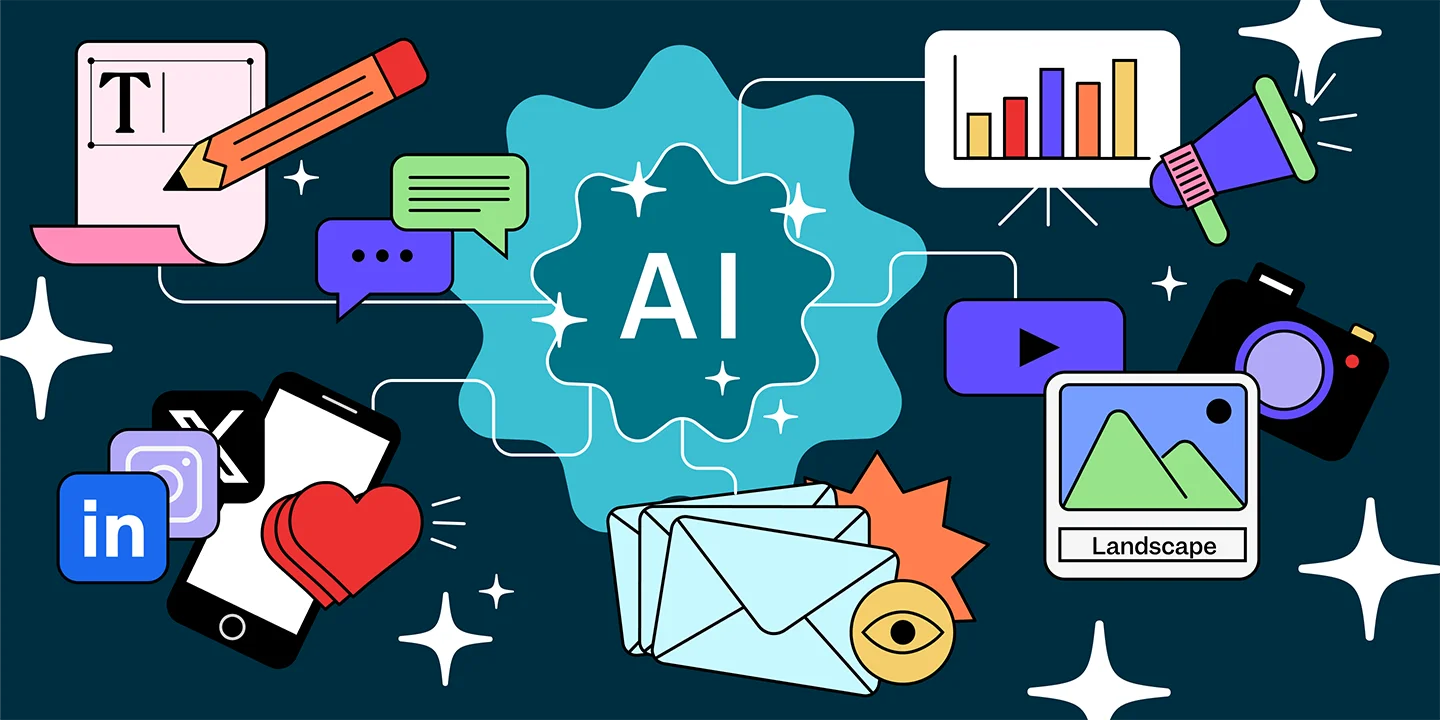
AI content generation tools fall into three broad categories: text generators, visual creators, and multimodal platforms.
Selection depends on your content volume, distribution channels, and internal skillsets. If your team publishes hundreds of product pages monthly, a text generator with API access may reduce drafting time by 60–70 per cent. If you produce social graphics at scale, a visual generator integrated with your design system streamlines asset creation.
Key factors when evaluating platforms include:
Integration capabilities with your CMS, CRM, or marketing automation stack
Data residency and processing locations for compliance with GDPR or sector-specific regulations
Customisation options such as fine-tuning, style guides, or brand voice parameters
Output licensing terms, especially for commercial use or client-facing materials
Avoid tools that lock you into proprietary formats or limit export flexibility. You need portability across systems.
Implementing AI Creation Workflows
AI creation workflows require structured stages: input preparation, generation, review, approval, and publication. Each stage needs defined roles and quality gates. Input preparation involves crafting prompts or briefs that specify tone, length, target audience, and key messages. The more precise your inputs, the closer the output matches your requirements. Generation happens within the tool, often in seconds. However, speed does not equal readiness. Review involves checking factual claims, verifying brand consistency, and ensuring regulatory compliance. Approval confirms the content meets strategic objectives and editorial standards.
You might need to look at:
Version control systems that track changes and approvals across teams
Feedback loops where editors flag recurring issues to refine prompts or fine-tune models
Metrics that measure time saved versus quality maintained, not just volume produced
Publication connects outputs to your distribution channels. Integration with scheduling tools, CMS platforms, or social management systems ensures consistency. Manual handoffs create bottlenecks and increase error rates.
This will in turn save up to 60 hours/month and see a 5-9% engagement lift.
Balancing Automation with Human Oversight
AI tools for content creation accelerate production but cannot replace strategic judgement or contextual understanding. Machine-generated content lacks awareness of shifting market conditions, competitive positioning, or internal priorities. You need human oversight at critical decision points: initial strategy, prompt engineering, editorial review, and performance analysis. Automation handles repetitive tasks like reformatting, translation drafts, or generating variations. Humans validate accuracy, ensure compliance, and align outputs with broader campaign goals.
Here are the most common oversight gaps:
Assuming model training data reflects current best practices or regulations
Publishing without testing how content performs with your specific audience segments
Effective implementation pairs automation with clear escalation paths. Implementation done well has to encompass all things legal as well, given the nature of today's GDPR and AI regulation laws relating to IP. When outputs require significant rework, your workflow should capture why and adjust inputs accordingly.

Measuring Impact and Continuous Improvement
Track metrics that reflect operational efficiency and content effectiveness. Time saved per asset, cost per piece, and production volume indicate efficiency gains. Engagement rates, conversion metrics, and customer feedback measure effectiveness. Compare ai content creation outputs against human-authored benchmarks to identify quality gaps. If automated social posts generate 30 per cent lower engagement, investigate whether tone, timing, or messaging differs. Continuous improvement requires iterating on prompts, refining review processes, and updating model parameters as your brand evolves.
Adopt a testing framework that isolates variables. Publish AI-generated variants alongside human-authored versions to understand performance differences. Use findings to optimise workflows rather than abandoning automation entirely.
Need a structured framework for integrating AI content tools without compromising brand consistency or compliance? Our technical leads at Lumina Studio Marketing design automation workflows tailored to your operational priorities, not generic templates. We map content pipelines, define quality gates, and ensure your systems scale efficiently. Let's walk through your current production process and identify where automation adds measurable value.
Need guidance mapping your current marketing activity to strategic frameworks that deliver measurable outcomes? Our team combines AI-powered automation expertise with practical implementation experience across regulated industries. Let's review your existing infrastructure and identify opportunities to increase performance without unnecessary complexity.
Book a free call today or reach out at info@luminastudiomarketing.com

FAQ
What is AI content creation and how does it work?
AI content creation involves using machine learning models to generate text, images, audio, or video based on user prompts. These models, often trained on vast datasets, recognize patterns and produce content that aligns with input instructions, making them useful for tasks like product descriptions or social media posts, though they still require human review for accuracy and brand alignment.
How should businesses choose the right AI content generation tools?
Businesses should select AI content generation tools based on their content needs, integration capabilities with existing platforms like CMS or CRM, compliance with regulations (such as GDPR), options for brand customization, and flexible export formats. Avoid tools that limit integration or lock content into proprietary formats.
Where does human oversight remain critical in AI content creation workflows?
Human oversight is essential at strategic checkpoints: developing content strategy, creating precise prompts, reviewing outputs for factual accuracy and brand consistency, ensuring regulatory compliance, and analyzing performance. AI accelerates production, but humans provide contextual understanding and quality assurance.
What are the main categories of AI content generation tools?
AI content generation tools fall into text generators (for written content), visual creators (for images and videos), and multimodal platforms (offering both). The best option depends on your content type, production volume, and the technical skills of your team.
How can organizations ensure compliance and quality with AI-generated content?
Organizations should implement structured workflows that include detailed prompt crafting, editorial reviews, defined approval steps, and compliance checks with relevant regulations. Integrating version control and feedback loops helps identify issues and improve future content quality.
What are the key metrics for measuring the success of AI-generated content?
Key metrics include time saved per content asset, cost per piece, production volume, engagement rates, conversion rates, and qualitative customer feedback. Comparing AI-generated piece performance to human-written benchmarks highlights areas for further improvement.
How does integrating AI tools impact marketing and content operations?
Integrating AI tools can significantly increase content production efficiency and scalability, but the greatest value comes from mapping automation to strategic business goals, defining clear quality gates, and connecting outputs directly to distribution channels for consistency.
What are common mistakes when implementing AI content creation in business?
Common pitfalls include skipping human fact-checking, assuming the AI’s training data is up to date or industry-specific, and neglecting to test AI content with your target audience. These can lead to off-brand or non-compliant outputs.
How can businesses continuously improve their AI content workflows?
Continual improvement relies on testing AI outputs against human-authored content, refining prompts, analyzing performance data, updating model parameters, and incorporating feedback. Maintaining a flexible workflow enables ongoing optimization as business needs and brand guidelines evolve.
Need guidance mapping your current marketing activity to strategic frameworks that deliver measurable outcomes? Our team combines AI-powered automation expertise with practical implementation experience across regulated industries. Let's review your existing infrastructure and identify opportunities to increase performance without unnecessary complexity.
Book a free call today or reach out at info@luminastudiomarketing.com


About the Author
Andrea Caruso
Andrea is a Business Development Manager with a background in B2B tech and startups. He works primarily with external partners and clients, focusing on growth, partnerships, and strategic opportunities. By connecting business needs with clear, actionable value propositions, he helps build long-term relationships and turn commercial strategy into sustainable growth.
Related Blogs
Related Blogs
Check our related blogs with practical insights on Marketing Automation and AI Marketing